
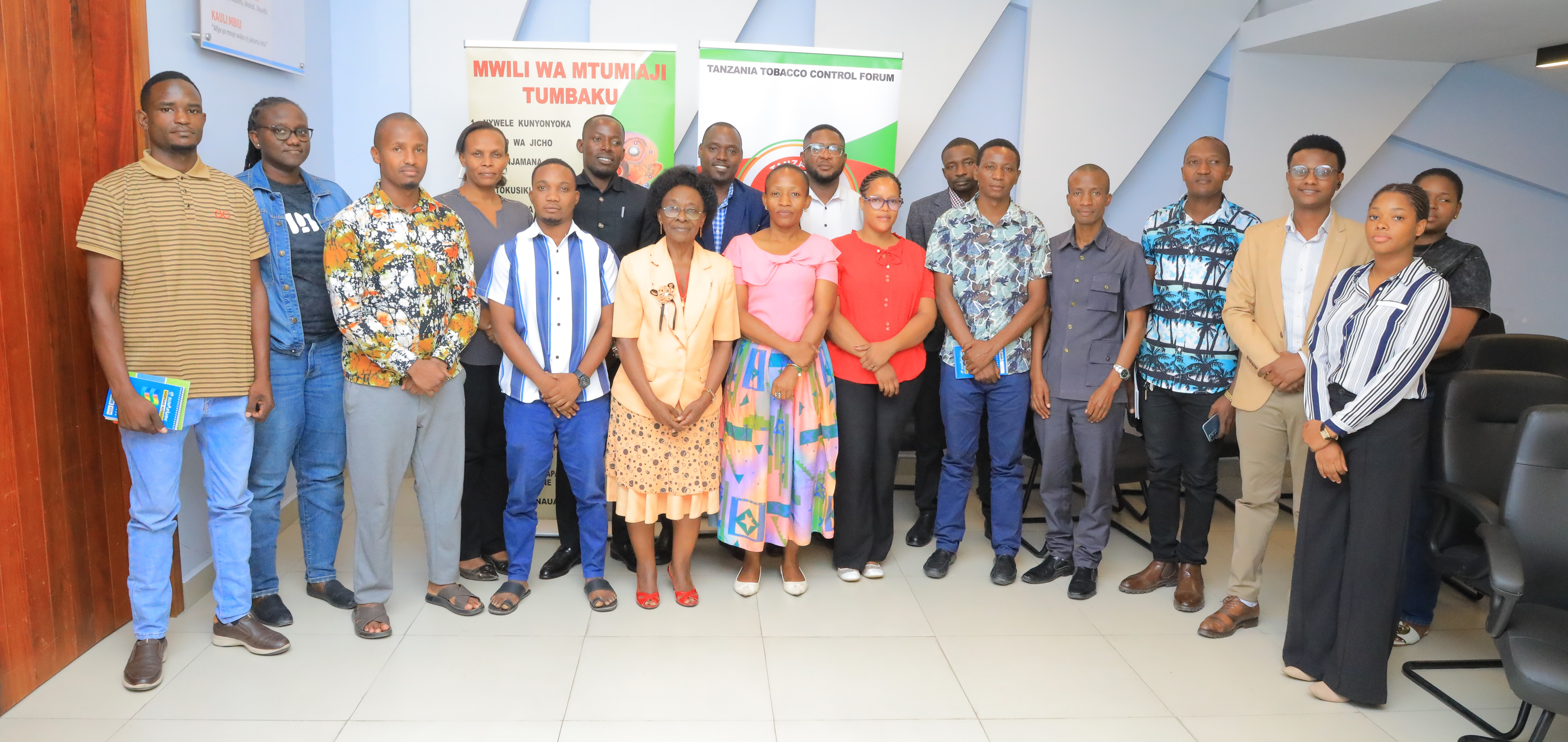
On May 20, 2026, the Global Youth Voices (GYV) movement continued its efforts to strengthen youth-led tobacco control advocacy by supporting a capacity-building workshop organized by the Tanzania Tobacco Control Forum (TTCF), bringing together youth advocates to deepen their understanding of tobacco industry interference (TII), digital advocacy, and the strategic use of artificial intelligence (AI) tools for tobacco control campaigning.
As part of the workshop, GYV was invited to facilitate dedicated sessions focused on exposing tobacco industry tactics and equipping young advocates with practical digital advocacy skills that can strengthen future campaigns and policy engagement efforts. The engagement reflects GYV’s continuing commitment to empowering young people with the knowledge, tools, and networks needed to counter tobacco and nicotine industry influence within their communities and beyond.
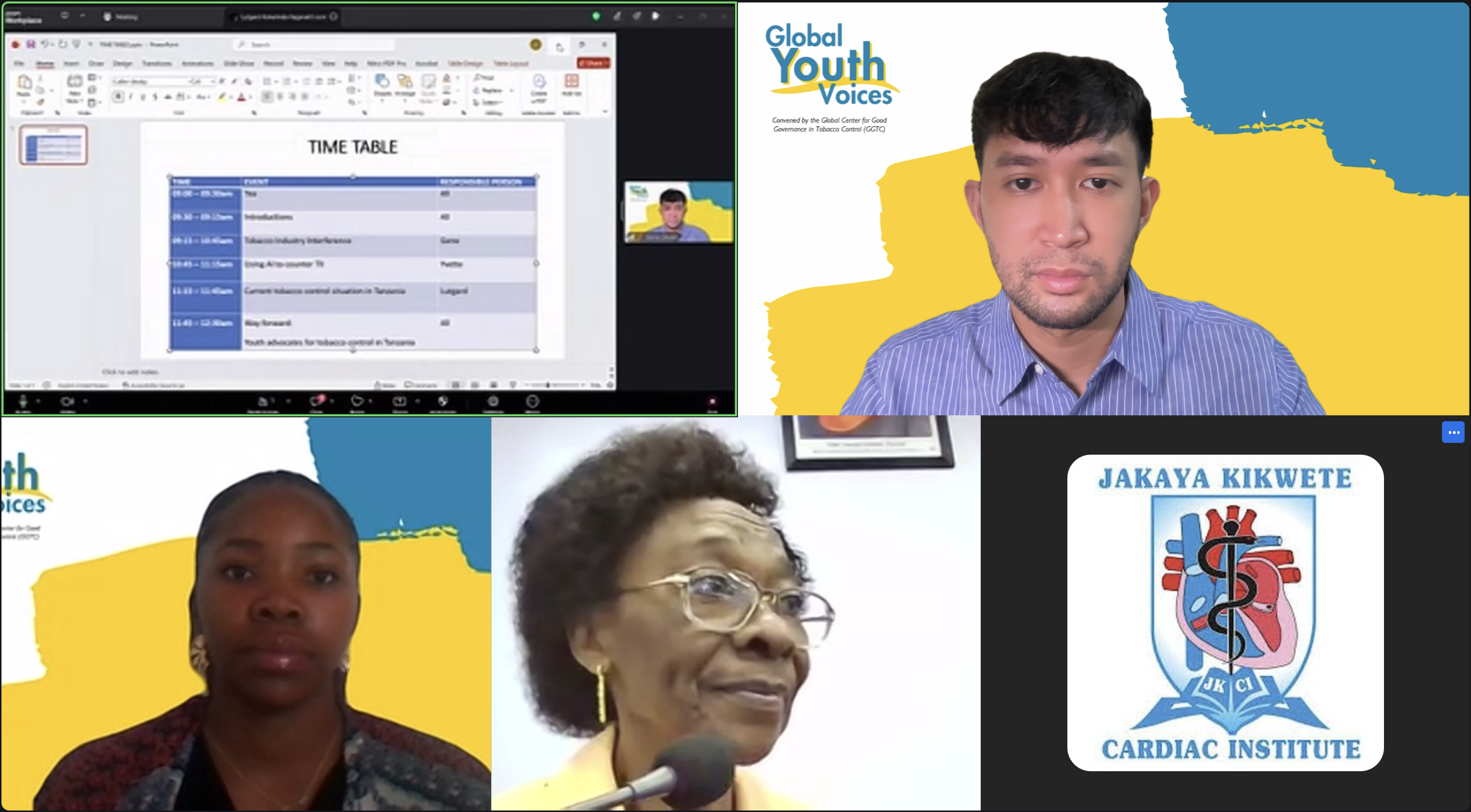
The workshop began with an introduction session where participants shared their advocacy backgrounds, experiences, and motivations for engaging in tobacco control work. The session highlighted the growing interest among young advocates in addressing the evolving tactics used by the tobacco and nicotine industry, particularly those increasingly targeting youth through digital platforms and lifestyle marketing.
Gene Gesite Jr., Coordinator of the Global Youth Voices movement, delivered the workshop’s first technical session on tobacco industry interference and the importance of protecting public health policies from industry influence under Article 5.3 of the WHO Framework Convention on Tobacco Control (WHO FCTC). The presentation explored how the tobacco and nicotine industry continues to interfere in policymaking through influencing, corporate social responsibility (CSR) initiatives, front groups, influencer marketing, litigation threats, and digital advertising strategies targeting young people.
The session also introduced participants to the Global Tobacco Industry Interference Index (GTI), which monitors industry interference across 100 countries. Discussions emphasized how youth advocates can help expose hidden industry influence by monitoring social media promotions, documenting tobacco industry-linked activities, tracking policy discussions, and supporting accountability efforts within their respective communities and countries. Particular attention was given to how the industry uses flavors, sleek product designs, influencer culture, and lifestyle branding to normalize nicotine use among young people.

Photo credit: Tanzania Tobacco Control Forum
Following the session on tobacco industry interference, Yvette Mbewe facilitated a practical session on the use of AI and digital tools for tobacco control advocacy. Drawing from experiences and learnings from the GYV AI Boot Camp, Yvette introduced participants to practical strategies for using AI-assisted tools to improve campaign planning, advocacy messaging, content creation, dissemination, and audience engagement.
The session explored how nicotine and tobacco products are increasingly marketed to young people through influencer culture, data-driven advertising, product design, and digital targeting strategies. Participants were also introduced to digital advocacy workflows and AI-supported tools that can help youth advocates create advocacy materials, social media campaigns, captions, short-form videos, and multilingual content while ensuring that messaging remains credible, ethical, and evidence-based. The presentation further emphasized the importance of adapting advocacy content across different digital platforms to maximize public engagement and policy impact.
The workshop also featured a presentation by Lutgard Kokulinda Kagaruki, Executive Director of TTCF, who shared findings from the Tanzania Tobacco Industry Interference Index, which forms part of the broader Global Tobacco Industry Interference (GTI) Index initiative. Her presentation provided participants with country-specific insights into how tobacco industry interference manifests within Tanzania and reinforced the importance of continued monitoring and implementation of WHO FCTC Article 5.3 protections.

Photo credit: Tanzania Tobacco Control Forum
An open forum followed the presentations, allowing participants to exchange ideas, reflect on shared challenges, and discuss opportunities for strengthening youth-led tobacco control advocacy efforts in Tanzania and across the region. Discussions focused on the growing digital presence of the tobacco and nicotine industry, the need for stronger youth engagement in policy advocacy, and the importance of building coordinated and evidence-based advocacy campaigns.
The workshop concluded with a discussion on the way forward, where participants reflected on how they can apply the knowledge and tools gained from the sessions to future advocacy initiatives, public awareness campaigns, and policy engagement activities. The session also reinforced the importance of continued collaboration between Tanzanian youth advocates and the broader Global Youth Voices movement in advancing youth-led tobacco control efforts globally.
Through engagements such as this workshop, GYV continues to support young advocates by creating spaces for learning, collaboration, and capacity-building while helping equip the next generation of leaders with the skills needed to counter tobacco industry interference and protect public health.